A Visitor’s Guide to Stargazing at Mammoth Cave National Park
A Visitor’s Guide to Stargazing at Mammoth Cave National Park
Most visitors come to Mammoth Cave, Kentucky, thinking about what lies underground. But when the cave tours end and the sun goes down, there is another side of the Mammoth Cave area worth exploring — the night sky.
Far from the bright lights of larger cities, the forests and rolling hills surrounding Mammoth Cave provide excellent opportunities for seeing stars, planets, meteor showers and, with the right equipment, objects far beyond our solar system.
If you’re planning a Mammoth Cave vacation, consider leaving at least one evening open for stargazing.
Mammoth Cave Is an International Dark Sky Park
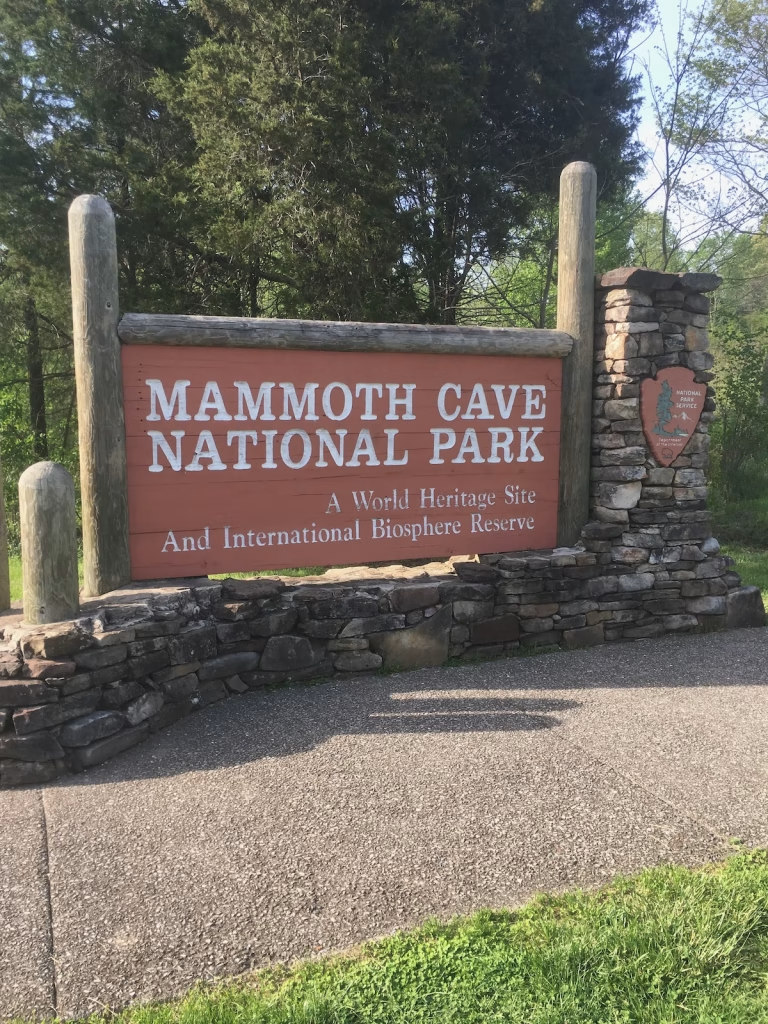
Mammoth Cave National Park was certified as an International Dark Sky Park in 2021.
The designation recognizes both the quality of the area’s night skies and the National Park Service’s efforts to protect the natural nighttime environment by reducing unnecessary artificial lighting.
It’s another reason Mammoth Cave is such an unusual destination.
During a single trip, visitors can explore the world’s longest known cave system below ground, hike through Kentucky forests during the day and experience a protected dark-sky environment after sunset.
Do You Need a Telescope?
Not at all.
One of the easiest ways to enjoy the night sky around Mammoth Cave requires no equipment whatsoever.
Find a dark location away from artificial lights and give your eyes about 15 to 20 minutes to adjust. As your night vision improves, stars that weren’t immediately visible begin to appear.
A reclining chair or blanket can be surprisingly useful stargazing equipment.
If you need a flashlight, consider using one with a red-light setting. Red light affects your night vision much less than a bright white flashlight.
Binoculars are another excellent option. Even ordinary binoculars can reveal stars and details that aren’t visible to the unaided eye.
A telescope can take the experience considerably farther, but you certainly don’t need one to enjoy a dark Kentucky night.
What Can You See Near Mammoth Cave?
What you’ll see depends on the season, time of night, weather and phase of the moon.
Bright planets may be among the easiest objects to identify. Familiar constellations change throughout the year, while satellites and occasional meteors can cross the sky unexpectedly.
Under sufficiently dark conditions, the Milky Way can become visible as a faint band stretching across the sky.
A telescope opens an entirely different window into the universe.
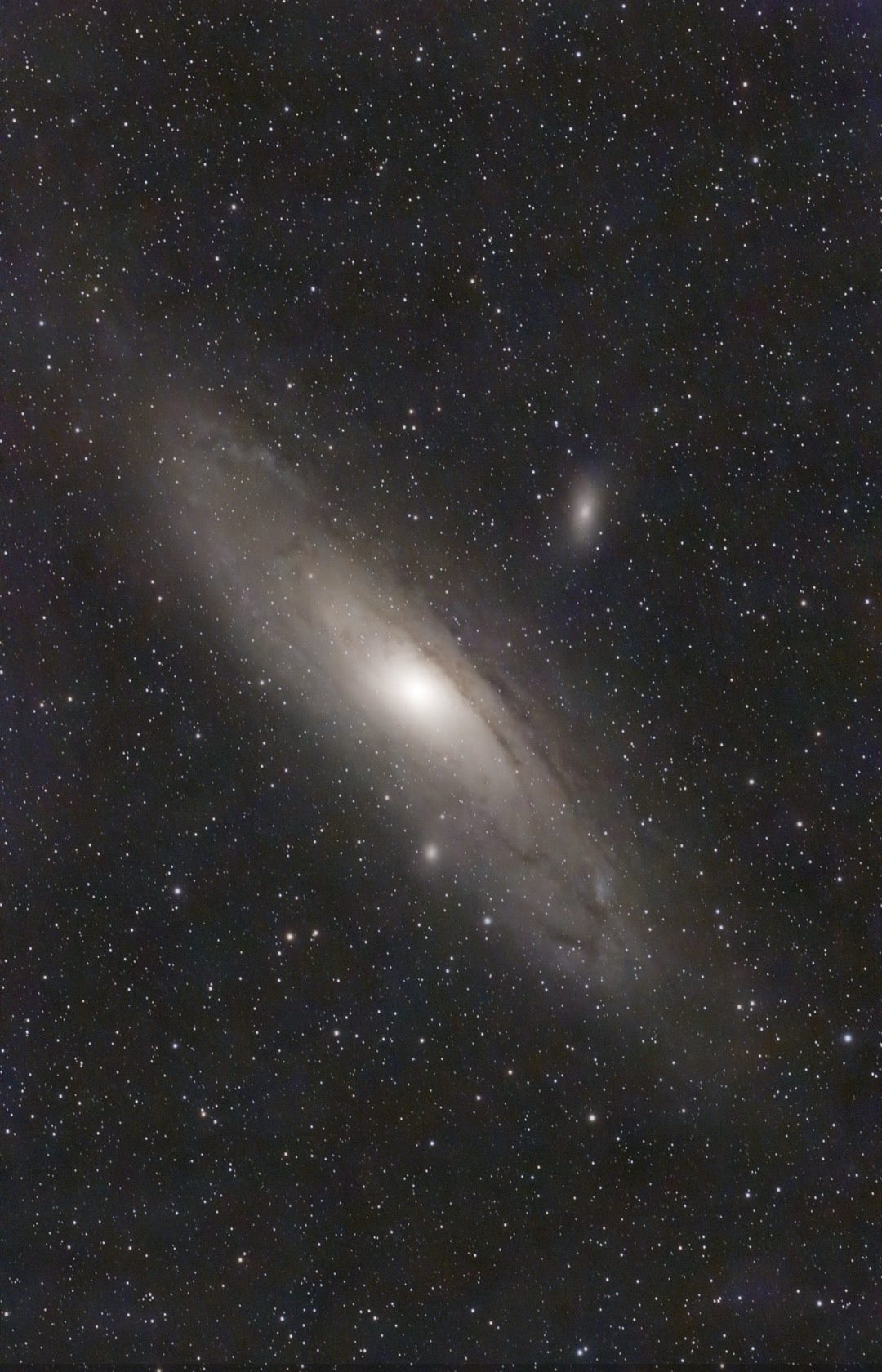
We’ve been experimenting with astrophotography at Hickory Cabins using a small ZWO Seestar smart telescope. From the property we’ve photographed objects including the Andromeda Galaxy, Helix Nebula, Western Veil Nebula, NGC 891 and many other deep-sky objects.
Some of these objects are thousands or even millions of light-years away.
One of the fascinating things about modern astrophotography is watching an object gradually appear on the screen as the telescope collects more light. Something barely visible — or completely invisible — to your eyes can slowly develop into a detailed image.
You can see examples of deep-sky objects we’ve photographed from the property on our Stargazing Near Mammoth Cave page.
When Is the Best Time to Stargaze at Mammoth Cave?
There isn’t a single stargazing season.
Every season brings something different.
Summer offers warm evenings and opportunities to see the Milky Way. Fall combines earlier darkness with comfortable temperatures. Winter provides long nights and can bring exceptionally clear skies. Spring introduces another changing collection of constellations and deep-sky objects.
The phase of the moon also makes a big difference.
If your goal is to see as many faint stars as possible, nights around a new moon are usually best because there is less moonlight brightening the sky.
But don’t automatically avoid nights with a bright moon.
The moon itself is one of the most interesting objects in the night sky. Binoculars or a small telescope can reveal craters, mountains and shadows along the lunar surface.
Some of the most dramatic views occur when the moon isn’t completely full because shadows make surface features easier to see.
Check the Weather — and the Moon
Before planning an evening of stargazing, check two things: the cloud forecast and the moon.
Cloud cover is obviously important, but humidity and haze can also affect how clearly you see the sky.
Then check when the moon rises and sets.
Even during a month when the moon is bright, there may be several hours of darkness before moonrise or after moonset.
If stargazing is an important part of your Mammoth Cave trip, a little planning can make a surprisingly large difference.
Stargazing Inside Mammoth Cave National Park
Mammoth Cave National Park encourages visitors to experience the park after dark.
Open areas generally provide better views because trees can block large portions of the horizon. The National Park Service recommends finding locations away from artificial lighting and allowing your eyes time to adjust to the darkness.
The park also offers astronomy and night-sky programs at various times.
Programs and schedules can change, so check Mammoth Cave National Park’s official website and event calendar when planning your trip.
Remember that you’re visiting a national park after dark. Stay in areas open to visitors, follow park regulations and bring a flashlight for safely moving around — preferably one with a red-light mode when you’re actively stargazing.
Don’t Forget Meteor Showers
You don’t necessarily need a telescope for some of the year’s most enjoyable astronomical events.
Meteor showers are a perfect example.
Several occur annually as Earth passes through trails of debris left behind by comets. During favorable conditions, you may see multiple meteors streak across the sky during an hour of watching.
A telescope can actually be a disadvantage for meteor watching because it limits how much sky you can see.
Instead, find a dark location with a broad view of the sky, get comfortable and look up.
Meteor showers are also another reason to check an astronomy calendar before your Mammoth Cave vacation. Your trip may happen to coincide with one.
Stargazing From Your Cabin
One advantage of staying outside the brighter commercial areas is that stargazing doesn’t necessarily require another excursion.
At Hickory Cabins, we’ve increasingly come to appreciate the night sky as part of the experience of staying in the Kentucky woods.
Spend the day touring Mammoth Cave, hiking, exploring Nolin Lake or visiting other attractions in the area. Then return to the cabin, have dinner, enjoy a campfire or relax on the porch.
When darkness arrives, look up.
Hickory Cabins sits on a wooded property near Mammoth Cave National Park and away from the concentrated lighting found in larger towns.
Because this is a wooded Kentucky property, trees naturally limit portions of the horizon from some locations. But there are also open areas where we’ve successfully observed and photographed the night sky.
In fact, many of the astrophotography images we share were captured right here on the property.
The night sky isn’t an attraction we created.
It was here all along. We simply started paying more attention to it.
Try a Night Without the Lights
If you normally live in or near a city, try a simple experiment during your Mammoth Cave vacation.
On a clear night, turn off unnecessary lights around your cabin.
Put your phone away for a few minutes.
Step outside and give your eyes time to adjust.
At first you’ll notice the brightest stars. Then more begin appearing. After 15 or 20 minutes, you may be surprised by how much more of the sky becomes visible.
Artificial light has become such a normal part of everyday life that it’s easy to forget what a naturally dark night looks like.
That’s one reason dark-sky preservation matters.
Darkness is part of the natural environment just like forests, rivers, caves and wildlife.
Make Stargazing Part of Your Mammoth Cave Trip
Mammoth Cave National Park is famous for what lies underground — and deservedly so. It’s home to the longest known cave system in the world.
But your Mammoth Cave vacation doesn’t have to end when your cave tour does.
There are trails to hike, rivers and lakes to explore, wildlife to watch and an International Dark Sky Park to experience after sunset.
If you’re staying in the Mammoth Cave area, leave at least one evening without a schedule.
Check the weather.
Check the moon.
Turn off the lights.
Then step outside and look up.
You may discover that one of the most memorable parts of your Mammoth Cave trip happens after dark.
Want to see what we’ve photographed from Hickory Cabins?
Visit our Stargazing Near Mammoth Cave page to see actual deep-sky images captured from the property and learn more about enjoying the night sky during your stay.
Planning a Mammoth Cave getaway? Explore Hickory Cabins and check availability for your visit.