
There’s Another World to Explore After the Sun Goes Down
Mammoth Cave may be famous for what lies beneath the ground, but after dark, there’s something remarkable overhead too.
Mammoth Cave National Park is an International Dark Sky Park, recognized for the quality of its night skies and efforts to protect the natural nighttime environment.
At Hickory Cabins, our wooded setting near Mammoth Cave National Park gives guests a chance to make the night sky part of their stay.
On a clear night, step outside, let your eyes adjust to the darkness and look up. Depending on the season, weather and moonlight, you may see constellations, planets, satellites, shooting stars and countless stars scattered across the Kentucky sky.
And with a camera or telescope, there’s much more hiding among those stars.
See What’s Really Up There
The Andromeda Galaxy — M31
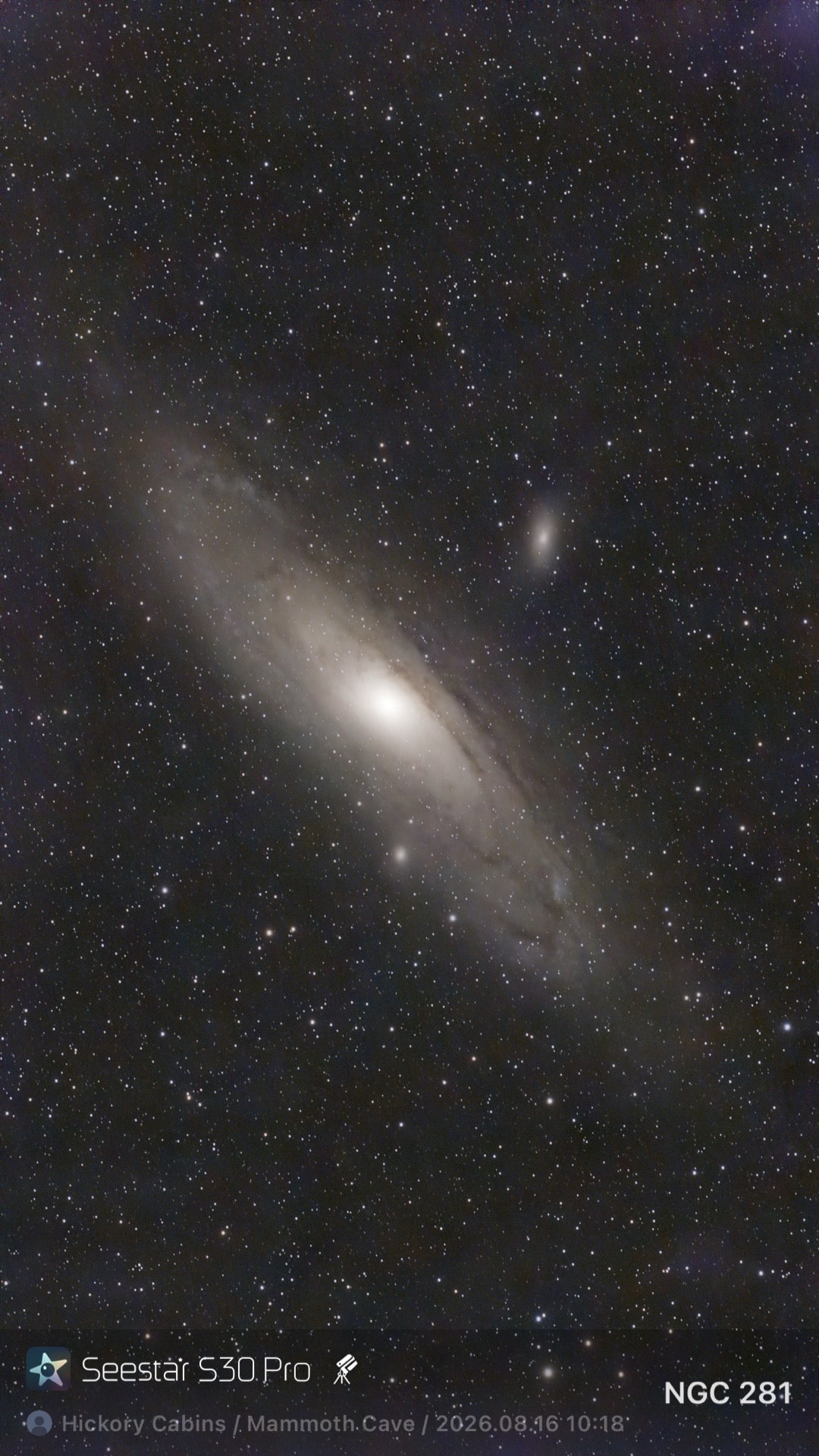
The Andromeda Galaxy, photographed at Hickory Cabins with our Seestar S30 Pro.
That glowing object isn’t a photograph from NASA or a stock astronomy image.
We photographed it right here at Hickory Cabins.
Andromeda is a galaxy containing hundreds of billions of stars. Its light has traveled approximately 2.5 million years before finally reaching the telescope.
The bright center, sweeping dust lanes and surrounding structure visible in this photograph were captured from the same night sky our guests can explore during their stay.
It’s difficult to imagine that something so enormous can be hiding in what, to our eyes, looks like an ordinary patch of night sky.
And Andromeda is only the beginning.
Watch the Invisible Become Visible
Human eyes are remarkably good at seeing the night sky in real time, but they can’t accumulate faint light the way a camera can.
Astrophotography changes that.
Instead of taking a single snapshot, a telescope camera can collect many exposures over time. As those observations are combined, extremely faint structures begin to emerge from the darkness.
That’s how we can photograph objects that may be extremely faint—or completely invisible—to our unaided eyes.
Every photograph below was captured from Hickory Cabins in the Mammoth Cave area.
Crescent Nebula — NGC 6888
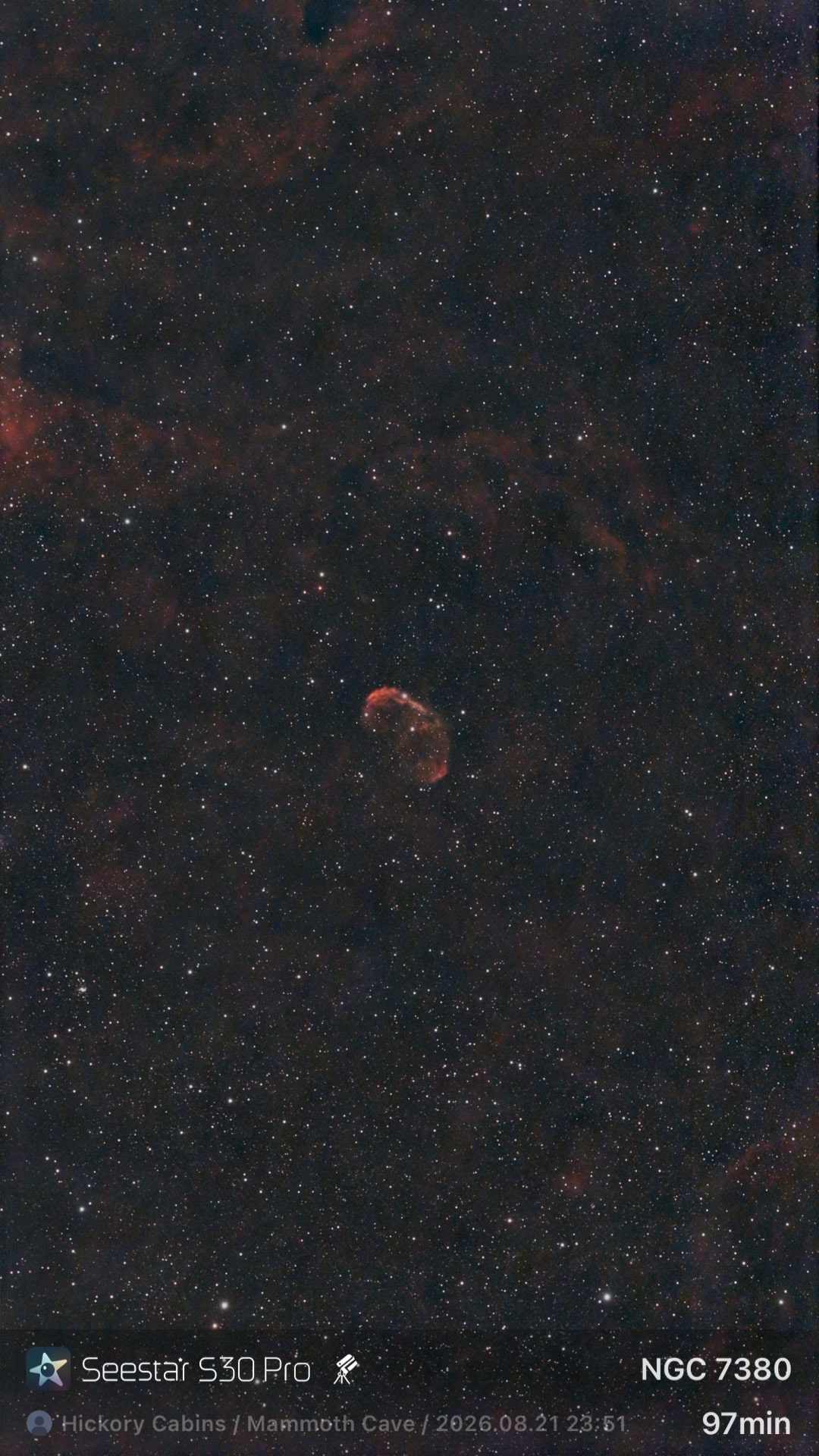
About 5,000 light-years away in the constellation Cygnus, the Crescent Nebula was created by material expelled from a massive star.
What begins as a field filled with tiny points of light gradually reveals the distinctive glowing shell of the nebula.
North America Nebula — NGC 7000
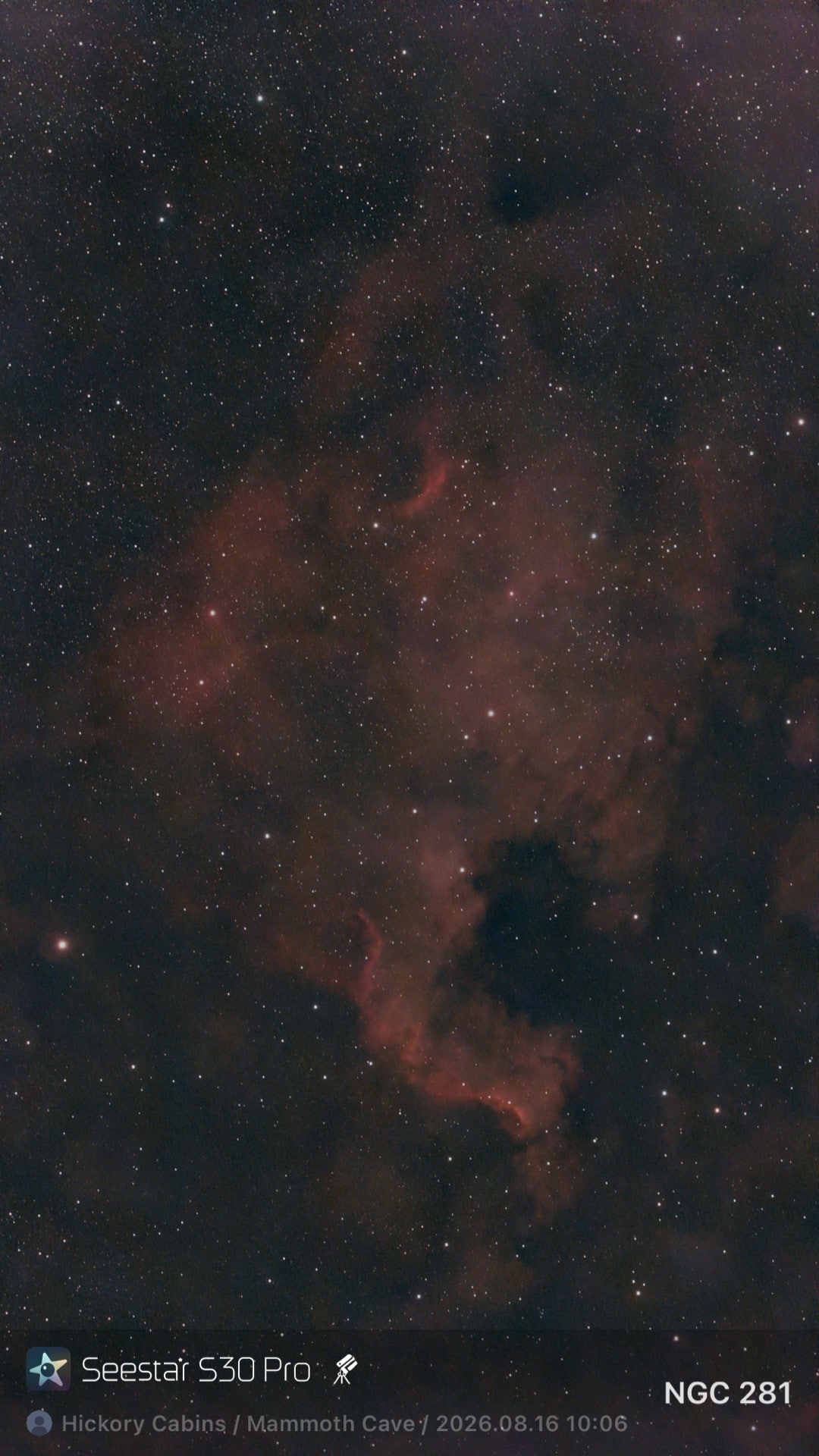
Huge clouds of glowing hydrogen stretch across this region of the constellation Cygnus.
The North America Nebula covers an enormous area of sky, yet much of its structure is far too faint for our eyes to see directly.
Long-exposure imaging reveals the sweeping clouds of gas hidden among the stars.
NGC 281 — The Pacman Nebula
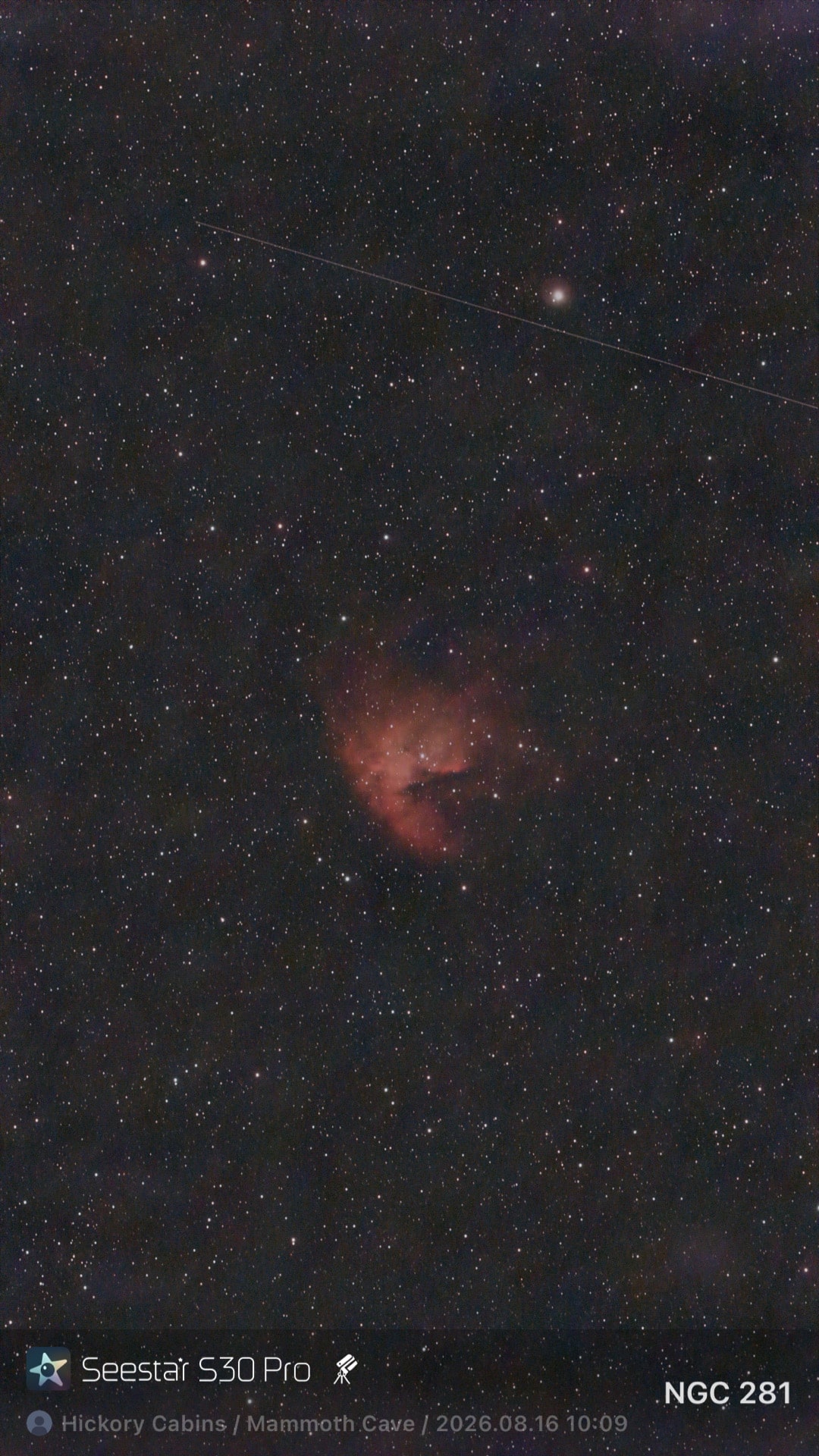
Thousands of light-years away in the constellation Cassiopeia lies NGC 281, popularly known as the Pacman Nebula.
Dark lanes of dust cross glowing clouds of hydrogen while young stars illuminate the surrounding region.
This is the kind of object that demonstrates one of the most surprising things about astrophotography:
The night sky contains far more than our eyes can see.
Dumbbell Nebula — M27
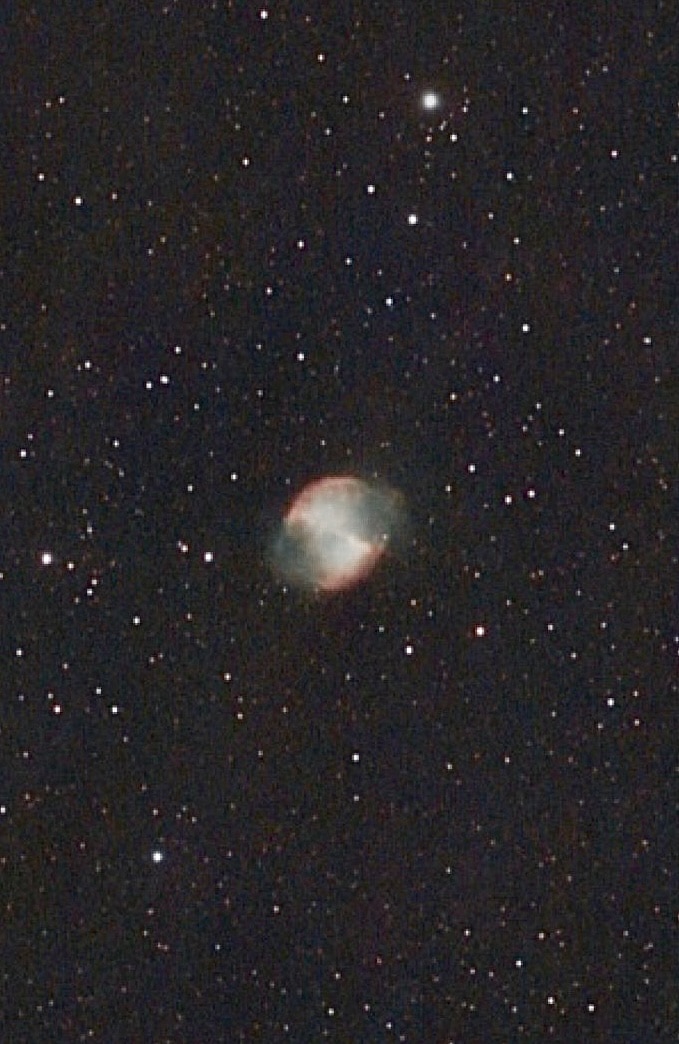
The Dumbbell Nebula is the remains of a Sun-like star near the end of its life.
The star expelled its outer layers into space, leaving behind an expanding shell of glowing gas surrounding its hot stellar remnant.
It’s one of the brightest planetary nebulae in the night sky—and a fascinating target for a small telescope.
Veil Nebula — NGC 6995
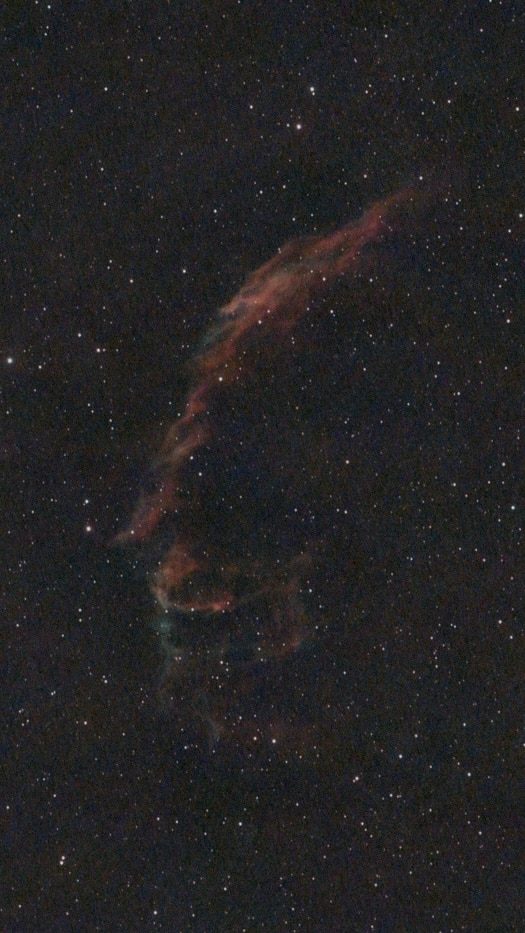
This delicate structure is part of the enormous Veil Nebula, the remains of a star that exploded thousands of years ago.
The expanding shock wave from that ancient supernova continues moving through space today.
Its wispy structure is extremely faint visually, but long-exposure photography can reveal the glowing filaments stretching through the surrounding star field.
What Will You See With Your Own Eyes?
There’s an important difference between stargazing and astrophotography.
The photographs on this page don’t represent what these objects will look like to your unaided eyes.
A camera can gather faint light for minutes or even hours. Your eyes experience the sky in real time.
That means you shouldn’t expect to walk outside and see Andromeda looking like the photograph above or giant red nebulae glowing across the sky.
But that’s part of what makes this so fascinating.
The light recorded in these photographs really is there.
The telescope simply gives us another way to see it.
With your own eyes, depending on the season and conditions, you may be able to enjoy:
- Thousands of stars under a clear, dark sky
- Familiar constellations
- Bright planets
- The Moon
- Shooting stars and meteor showers
- Satellites moving across the sky
- The Milky Way when conditions are favorable
- Some brighter deep-sky objects as faint points or patches of light
Sometimes you don’t need any equipment at all.
Find a comfortable place, turn off the lights, give your eyes time to adjust and enjoy the sky.
Try Astrophotography During Your Stay
Rent Our Seestar S30 Pro Smart Telescope
$49 per stay
Want to see what you can capture?
Hickory Cabins guests can rent our Seestar S30 Pro smart telescope during their stay.
And you won’t be handed a telescope and an instruction manual and left to figure everything out.
We Provide the Initial Setup
We’ll set up the Seestar and get it ready for you.
You can then use the Seestar app to explore the sky, select an available target and watch as the telescope automatically locates and tracks it.
Depending on the season and what’s above the horizon, you might choose a galaxy, nebula, star cluster or the Moon.
Then something pretty remarkable happens.
You Watch the Image Develop
At first there may be little more than stars on the screen.
The Seestar begins collecting exposures.
More light accumulates.
A faint shape appears.
More detail emerges.
And gradually, something that was effectively invisible to your eyes becomes a photograph.
The six images on this page demonstrate the kinds of objects a small smart telescope can reveal under the skies at Hickory Cabins.
These aren’t examples supplied by the telescope manufacturer. They’re our photographs, captured here.
Your results will depend on weather, moonlight, season, target position and observing time, but that’s part of the adventure.
You never know exactly what the night will give you.
A Few Tips for a Great Night Under the Stars
Darkness matters.
Turn off unnecessary outdoor lights and avoid looking at bright phone screens while stargazing. It can take your eyes 20 minutes or more to become well adapted to darkness.
If you need a flashlight, a dim red light will interfere less with your night vision.
Moonlight matters too. A bright Moon is wonderful if you want to observe lunar craters and features, but it can make faint stars and the Milky Way harder to see. Nights around a new Moon provide the darkest conditions.
And don’t forget to look up before reaching for a telescope.
Sometimes the most memorable part of stargazing is simply standing beneath a dark sky and realizing just how much is above you.
From Mammoth Cave to the Milky Way
Spend your day exploring one of the world’s great cave systems.
Hike through the Kentucky woods.
Visit Nolin Lake.
Play a round of disc golf at Wolf Knob.
Then, when darkness settles over the woods, your day doesn’t necessarily have to be over.
There’s another landscape waiting overhead.
You can sit outside your cabin and watch the stars.
You can search for constellations.
You can watch for a shooting star.
Or you can point a telescope toward something millions of light-years away and capture light that began its journey toward Earth long before any human being existed.
Stay for the Cave. Look Up for the Stars.
Experience the night sky at Hickory Cabins near Mammoth Cave, Kentucky.